
1In 1 playlists
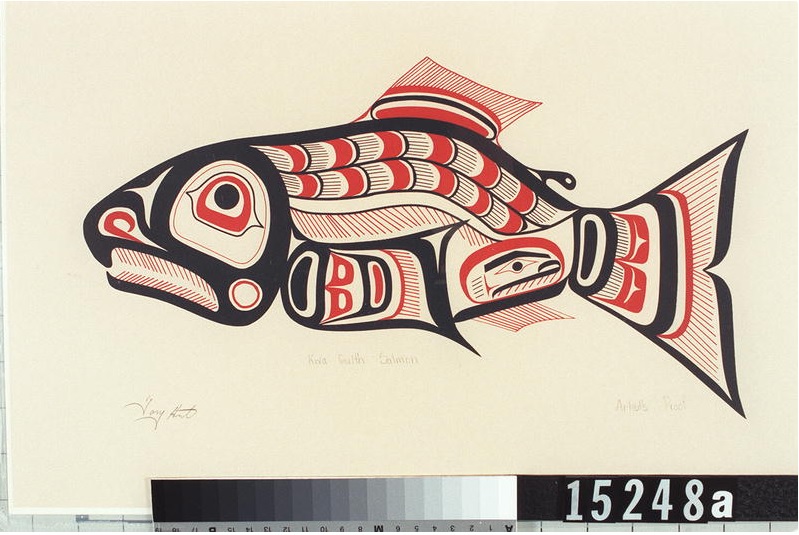
This is a silkscreen print of a salmon by the Kwakwaka'wakw artist Tony Hunt. What details do you notice Tony Hunt utilizing to add texture to his salmon? Are there similarities between Hunt's salmon and the scientific drawing of a salmon?
1In 1 playlists
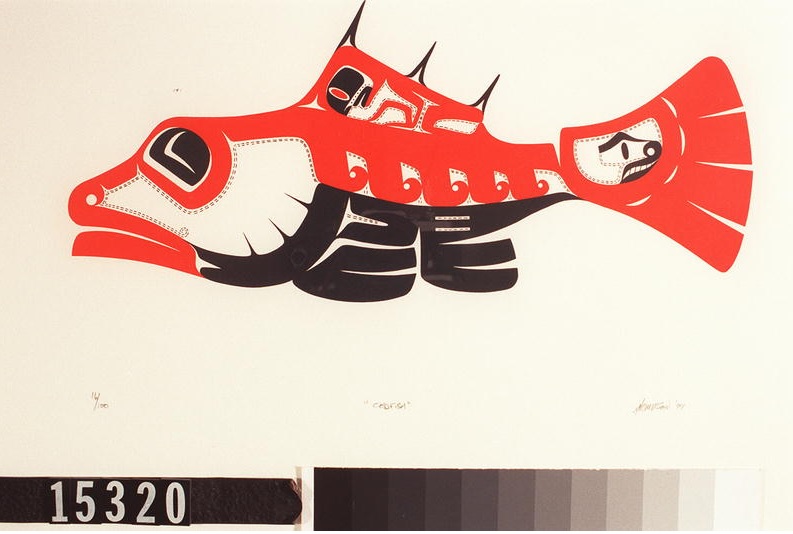
This is a Nuu-chah-nulth, Ditidaht silkscreen print of a Codfish by Art Thompson. How is this piece of art different from scientific art?
1In 1 playlists
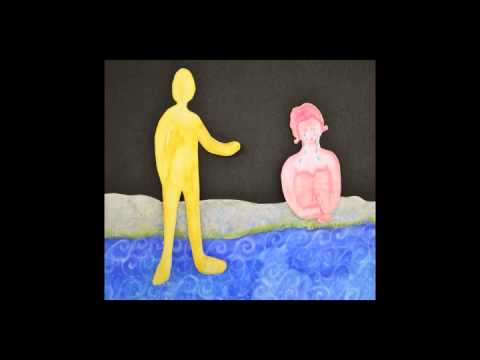
Listen to the Haida story of the Salmon Boy and learn more about the First Nation's perspective of fish and nature. Why is respecting nature and wildlife important to First Nation's people? What does this story tell us about the First Nation's relationship with salmon and nature?
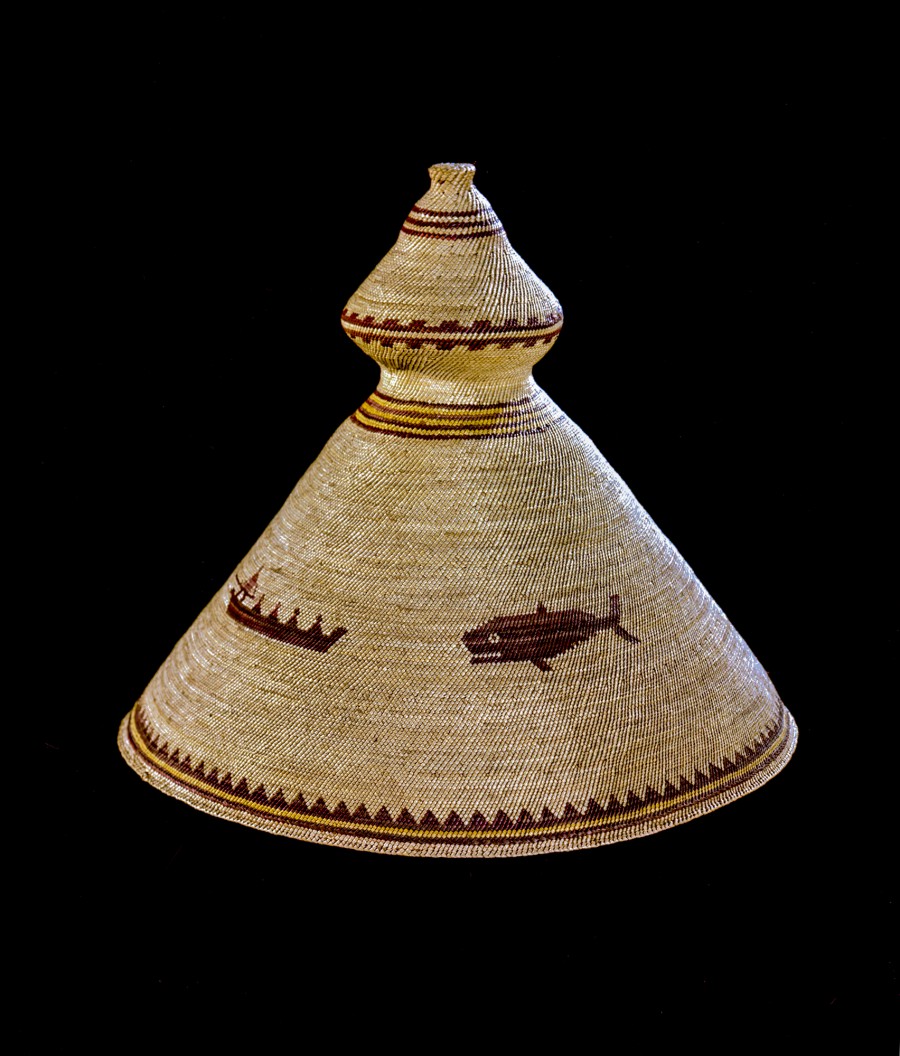
This Tla-o-qui-aht Whaler's Hat, created by Ellen Curley, is part of the Royal BC Museum's 100 Objects of Interest. The designs encircling the brim represent the mountains that outline Nuu-chah-nulth territories. The whale and whaling canoe appear to chase each other around the sides of the hat.
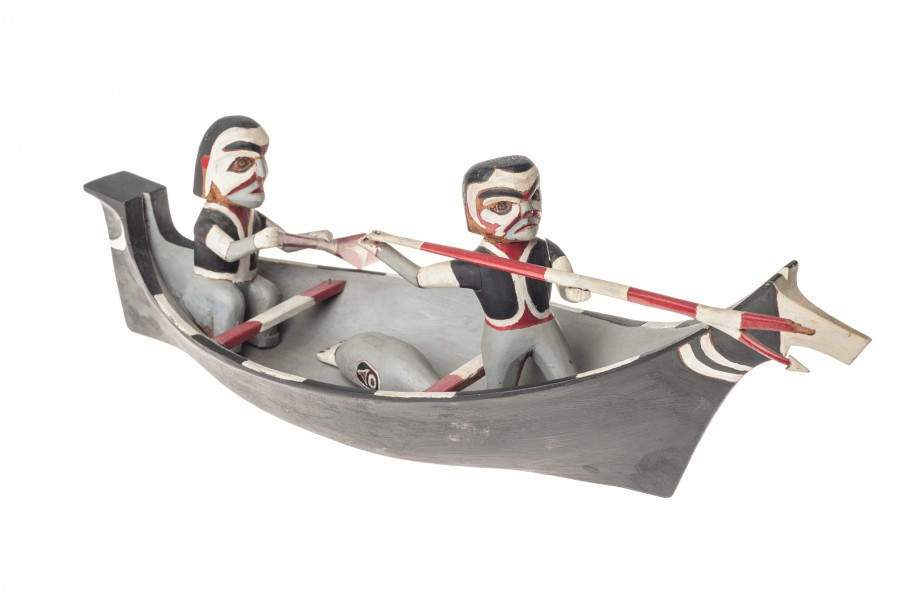
This Nuu-chal-nulth or Kwakwaka'wakw model sealing canoe is part of the Royal BC Museum's 100 Objects of Interest. This model in carved and painted wood shows two seal hunters, one steering the canoe and one about to spear a seal. There is a seal at the bottom of the boat. Nuu-chah-nulth hunters were active in commercial pelagic sealing.
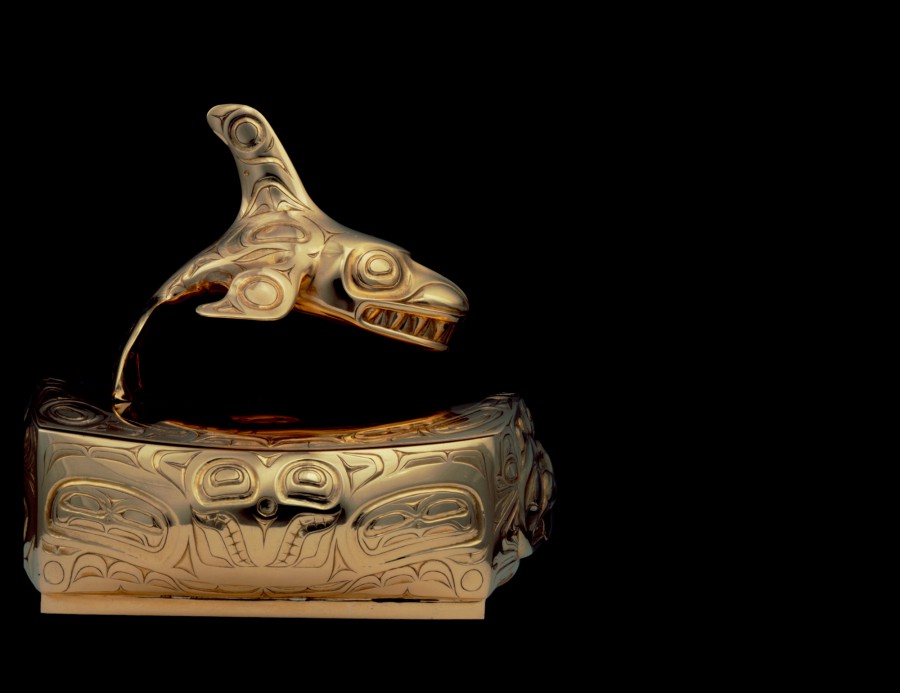
This Haida Box, carved by Bill Reid, is part of the Royal BC Museum's 100 Objects of Interest. For this small gold box, made in 1971, he used jewellers’ techniques to render Haida forms drawn from traditional carving and formline designs.

1In 1 playlists
Listen to the story "Duck in the Truck" by Jez Alborough translated into Hul'q'umi'num by Delores Louie (Swustanulwut). This video provides you with a full immersion experience into the Hul'q'umi'num language. If using this in a classroom setting you could possibly have the storybook in English to follow along with your class.

1In 1 playlists