
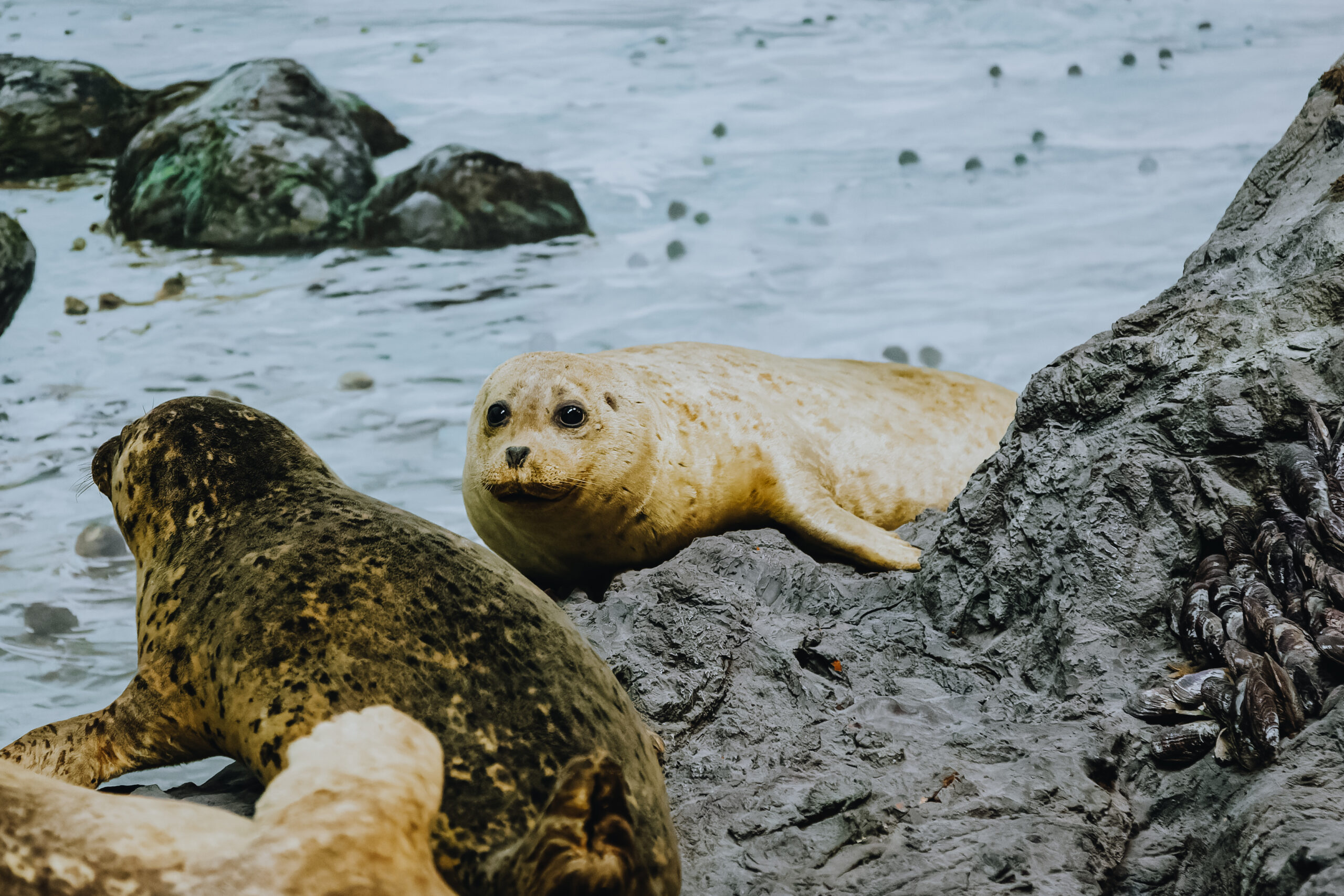
Les phoques abondent sur la côte de la Colombie-Britannique. Bien qu’ils coexistent avec le saumon depuis le retrait des glaciers il y a des milliers d’années, ils sont souvent accusés d’être responsables du déclin de leurs populations.
- Phoque commun, (Phoca vitulina), Royal BC Museum
- Harbour Seal, (Phoca vitulina), Royal BC Museum

L’opossum de Virginie est le seul marsupial d’Amérique du Nord. Il a envahi la Colombie-Britannique à partir des États-Unis, mais son aire de répartition nordique est limitée car ses oreilles et sa queue sont dénudées et sujettes aux engelures.
- Opossum de Virginie, (Didelphis virginiana), Royal BC Museum
- Virginia Opossum, (Didelphis virginiana), Royal BC Museum
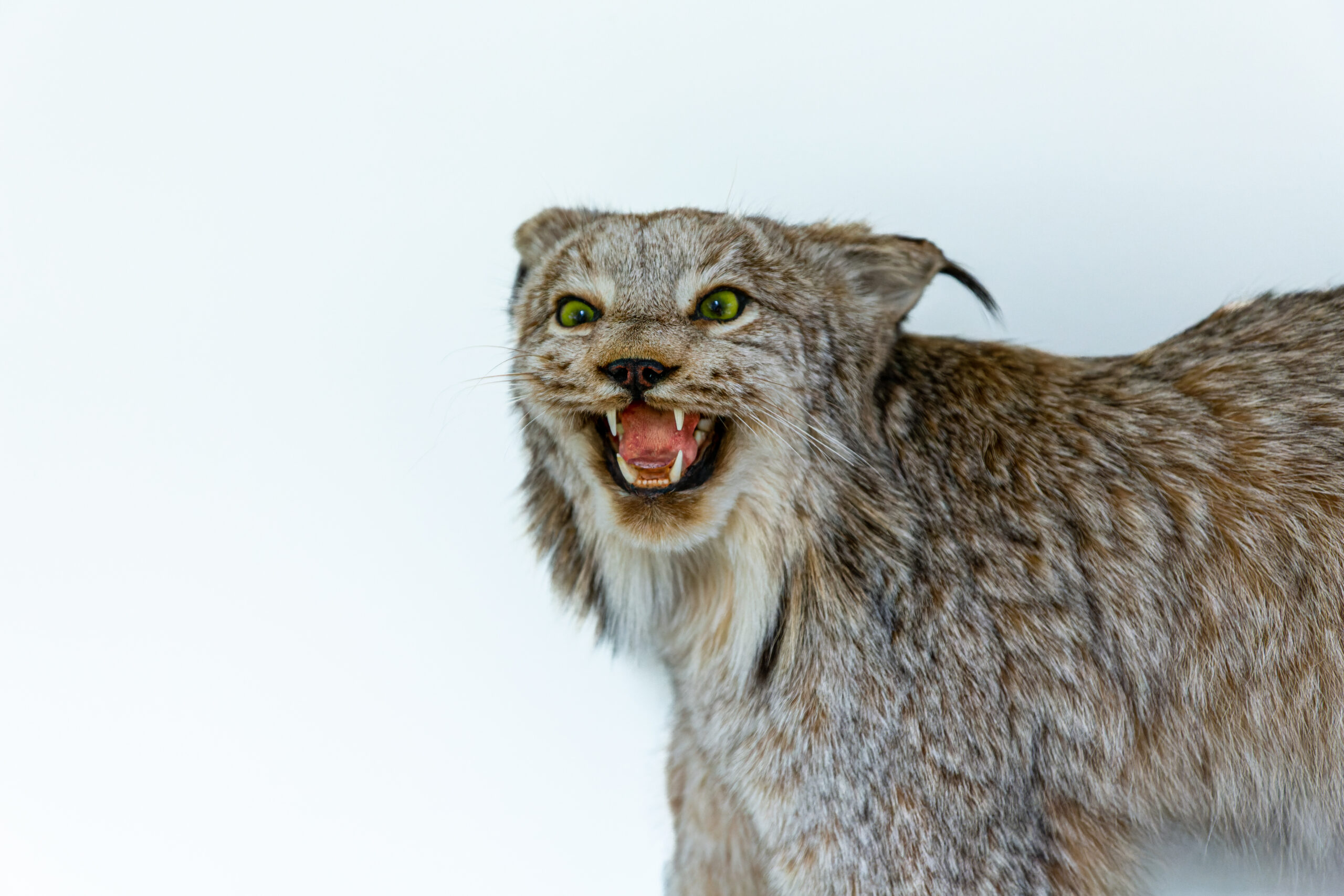
Présent à travers le pays ainsi qu’en Alaska, le lynx du Canada s’apparente à deux espèces de lynx d’Eurasie. Spécialiste des climats froids, le lièvre d’Amérique constitue sa principale source de nourriture.
- Lynx du Canada, (Lynx canadensis), Royal BC Museum
- Canada Lynx, (Lynx canadensis), Royal BC Museum

Overview of the the pre and post visit resources for the Art with Chrystal Phan Digital Field Trip

Narrate with the music using the script below. Allow enough time for the students to play and experiment with their movements in between lines of narration.
- You are a Hadrosaur playing in the forest
- Lean forward and walk on all fours as you trot between the trees
- The bright sunlight shines through the Dawn Redwood trees, and you start to get tired in the heat. It’s so hot!
- Use the claws on your back feet to dig in the dark, wet earth to find some water
- Take a big drink have a rest as you cool off

Narrate with the music using the script below. Allow enough time for the students to play and experiment with their movements in between lines of narration.
- You are Tyrannosaurus Rex walking through the forest
- You are crashing down trees as you move
- Let out a deep roar as you stomp
- Use your sharp teeth to pick up a smaller dinosaur in your teeth and shake it in your mouth
- It does not taste good, drop it on the ground
- Keep stomping around looking for something else to eat
- Smile with your big, pointy teeth
- The sun goes down and you curl up on the forest floor to fall asleep
Narrate with the music using the script below. Allow enough time for the students to play and experiment with their movements in between lines of narration.
- You are a tall sauropod, looking for lunch
- Walk slowly as you stretch out your long neck, looking over the trees for tasty leaves
- Choose a tree and chew the sweet, green leaves.
- Look around you on the ground at the little dinosaurs running around far below at your feet. Be careful as you walk not to step on any of them!
- It takes a lot of energy to move your heavy body, so you move slowly, slowly.
1In 1 playlists
Vocabulary List