

By OB25
In order to lay her eggs (called roe), the female salmon uses her caudal fin to dig a shalow hole in the bottom gravel (a redd) to create a low-pressure zone where her eggs can incubate. The female covers the eggs by disturbing the gravel at the upstream edge of her redds. She may make seven redds for her ~5000 eggs.

By OB25
For our full bibliogphy, please read the document below.
By OB25
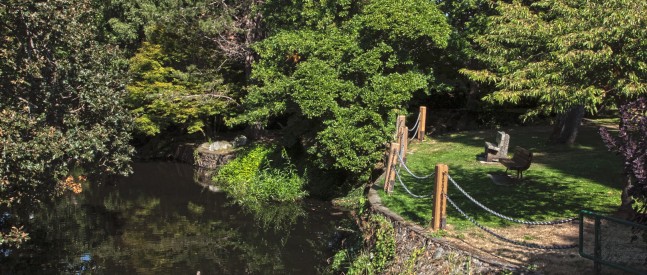
Our final plan to restore Bowker Creek's salmon is based around restoration: restoring the watershed, changing the flow of the river, creating suitable gravel, providing salmon food, reducing levels of ammonia, daylighitng parts of the creek, and reducing turbidity. While a huge project, it would result in bringing salmon back to Bowker Creek.
By OB25
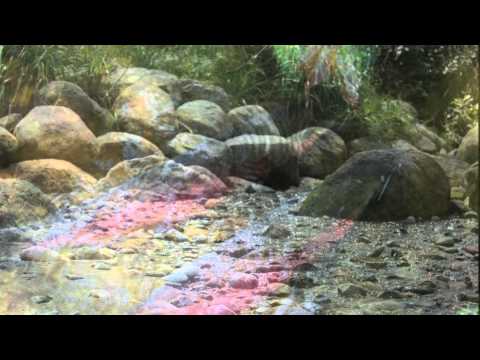
In 2011, Spanish banks took on a project restoring its salmon run. The stream had become blocked, and parts were hidden underground. but after clearing the dams, daylighting parts, and restoring natural vegetation, the salmon returned. The story is similar to Bowker Creek - urban devlopement hurt the salmon run, but shows that it can be fixed.
By OB25
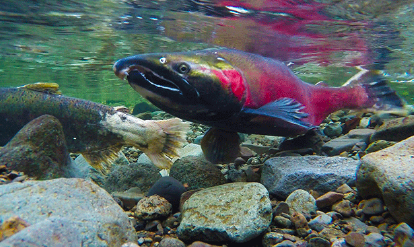
We have concluded that Coho salmon are the ideal species to inhabit a restored Bowker Creek. They were one of the only salmon species present in early Bowker Creek, a high water flow tolerance means that they would be adapted to Bowker's high flow. Coho salmon are endangered, so reestablishing this salmon run may also save the Coho salmon species.
By OB25
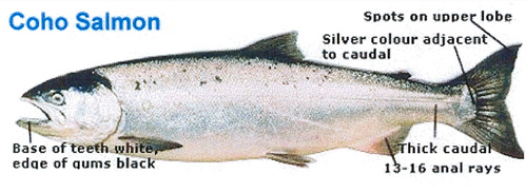
Coho salmon is the salmon species that we have decided would be a perfect fit to restore the Bowker Creek salmon run. Coho salmon are native to the west coast and are one of the original species that was historically part of the salmon run through Bowker Creek. Here is an image of a Coho salmon and how to identify the native fish.

By OB25
This document details the process, and purpose of our inquiry and the initial thoughts that lead us to research what would enable the restoration of a healthy salmon run in Bowker Creek.
By OB25
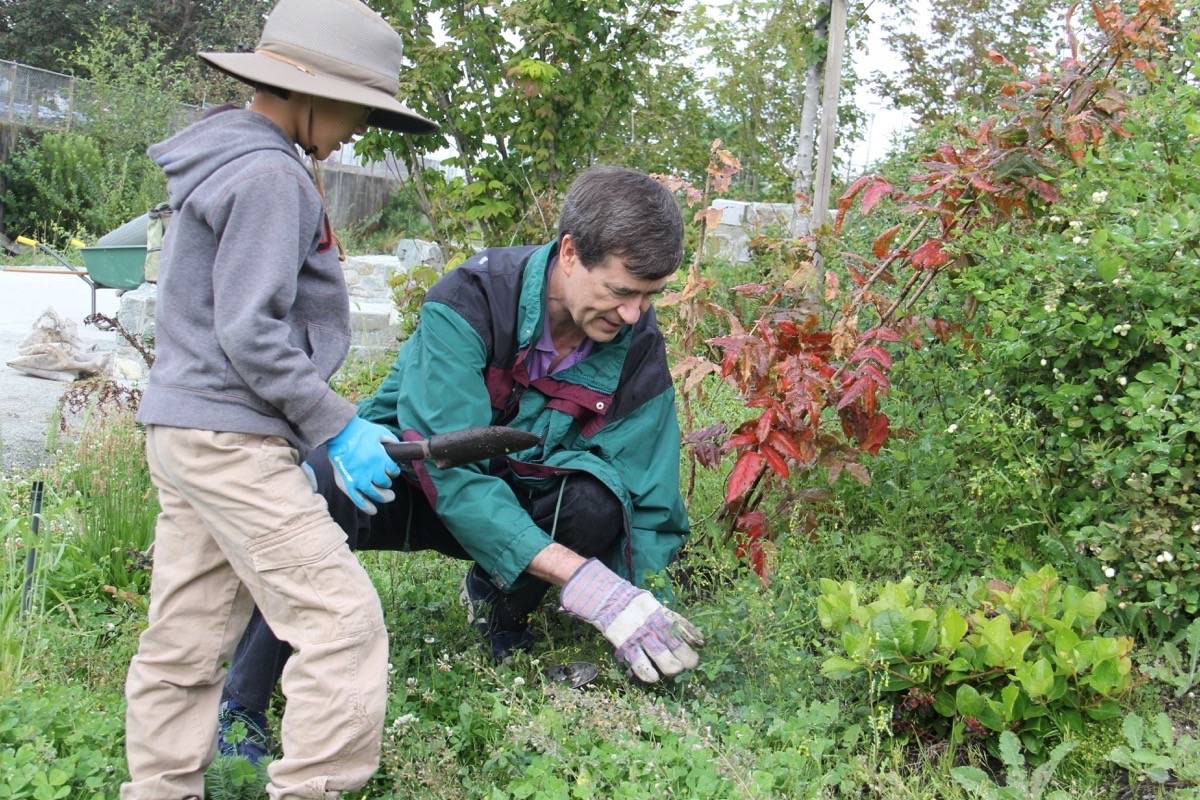
A main focus of the Bowker Creek Initiative is to connect the community, which will be greatly impacted by the salmon. Having such an important species nearby allows for learning opportunities, and having a place where you can actually see these creatures creates an opportunity for people to learn about how their actions impact living creatures.